Connect with us

Blog

Career Advice That Actually Works in the Startup World

Published

on

Career Advice That Actually Works in the Startup World
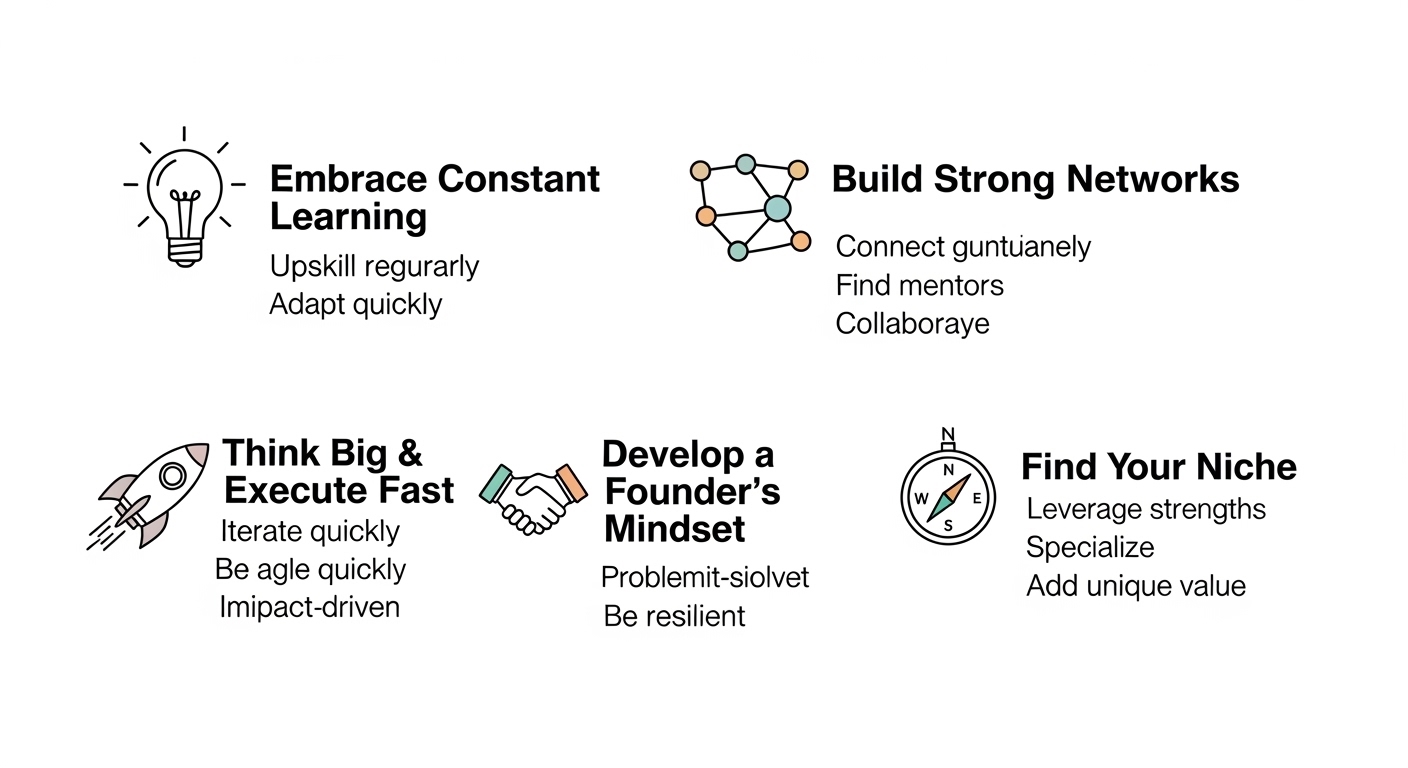
In the fast-moving world of startups and tech, traditional Career Advice often falls flat. The old playbook—climb the ladder, wait your turn, stay in one lane—doesn’t hold up in an environment where roles shift overnight and companies pivot in weeks. For startup founders, entrepreneurs, and tech professionals, career growth isn’t linear. It’s iterative, experimental, and deeply tied to value creation.

If you are building a company, scaling a product, or navigating the chaos of early-stage growth, you already know that career decisions carry higher stakes.  Your network is your leverage. In this landscape, career strategy isn’t just about personal advancement; it’s about positioning yourself at the intersection of opportunity and impact.

This is Career Advice built for people who operate in uncertainty—and intend to win there.

The Startup Career Reality: There Is No Ladder

In large corporations, career paths are structured. Titles map to responsibilities. Promotions follow predictable cycles. In startups, none of that is guaranteed. Your title might change three times in a year. You may lead a team one quarter and build product the next.

The real currency in a startup isn’t tenure; it’s traction.

That means your focus should shift from “What role do I want?” to “What outcomes can I consistently drive?” Founders and early employees who rise fastest are the ones who solve problems no one else can—or will.

Consider this: in early-stage companies, job descriptions are often placeholders. If you confine yourself to them, you limit your impact. The professionals who accelerate their careers in startups look for broken systems, missed opportunities, and bottlenecks. Then they fix them.

This mindset shift is foundational Career Advice for anyone in tech. Stop managing your job. Start managing your leverage.

Career Advice for Founders: Your Personal Brand Is Your Company’s Brand

As a founder, your career trajectory is inseparable from your company’s story. Investors back people before they back products. Early hires join missions led by credible leaders. Customers trust founders who demonstrate authority.

Your reputation compounds faster than revenue.

Smart founders understand that every public move—podcasts, articles, conference talks, social posts—contributes to long-term positioning. Thought leadership is not vanity; it is strategic signaling. It communicates clarity of vision, domain expertise, and execution capability.

But this is where nuance matters. Authenticity wins over performance. Digital audiences and tech communities can detect empty self-promotion instantly. The strongest founders build visibility by sharing lessons learned, failures, pivots, and honest insights from the trenches.

This kind of Career Advice may feel secondary when you are focused on runway and growth metrics. It isn’t. Your narrative is part of your capital stack.

The Skill Stack Strategy: Depth + Range

In startups, specialists are valuable. Generalists are adaptable. The most powerful professionals combine both.

You need at least one deep, defensible skill—engineering, product design, growth marketing, AI architecture, enterprise sales. That’s your anchor. It earns respect and opens doors.

Then you build range around it.

An engineer who understands go-to-market strategy is more influential. A marketer who grasps technical constraints is more credible. A founder who understands finance beyond surface metrics makes stronger strategic decisions.

Here’s a simple way to think about it:

Core Skill (Depth) Complementary Skill (Range) Strategic Advantage
Software Engineering Customer Discovery Builds what users actually want
Growth Marketing Data Analytics Scales with precision
Product Management Technical Architecture Aligns roadmap with feasibility
Sales Behavioral Psychology Closes complex deals
Founder Vision Financial Modeling Makes sustainable decisions

This layered approach to Career Advice is particularly relevant in tech, where silos break companies. When you speak multiple functional “languages,” you become a bridge.   get funded.  become indispensable.

Career Advice for Navigating Risk

Startups are inherently volatile. Funding can disappear. Markets can shift. Entire business models can become obsolete with a single technological breakthrough.

So how do you build a stable career inside unstable environments?

First, decouple your identity from any one company. You are not your startup. You are a portfolio of skills, relationships, and results. If a venture fails, your experience compounds—if you frame and leverage it correctly.

Second, maintain what I call “optionality capital.” This includes your professional network, industry visibility, and up-to-date skills. Even if you have zero intention of leaving your current role, stay relevant. Publish occasionally. Attend events. Maintain investor and peer relationships. Keep learning.

Third, treat every role as a case study in execution. Document your wins. Quantify your impact. Keep a running record of metrics you influenced—revenue growth, churn reduction, user acquisition, operational efficiency. In the future, those numbers become proof of competence.

Good Career Advice in the startup world acknowledges risk without being paralyzed by it. You don’t avoid risk; you price it correctly.

Building Authority in the Digital Era

For tech professionals and entrepreneurs, authority no longer comes solely from titles. It comes from demonstrated insight.

Platforms like LinkedIn, X, and Substack have flattened access to audiences. A junior developer with sharp insights into AI tooling can build a following that rivals seasoned executives.

But visibility must be intentional.

If you want to grow your career strategically, choose a domain and go deep publicly. Comment intelligently on trends. Break down complex ideas. Share lessons from real-world experiments. Over time, consistency builds authority.

This is not about becoming an influencer. It’s about being discoverable when opportunity searches for expertise.

Many founders underestimate how often partnerships, investments, and senior roles originate from digital visibility. In today’s ecosystem, your online footprint is part of your resume.

The Hidden Power of Mentorship—In Both Directions

One of the most overlooked pieces of Career Advice is this: mentorship should be multidirectional.

As a founder or senior professional, you need mentors who have scaled beyond your current stage.  compress years of trial-and-error into a single conversation.  challenge your blind spots. They prevent expensive mistakes.

At the same time, mentoring others sharpens your own thinking. Teaching forces clarity. It exposes gaps in your knowledge. It builds goodwill across your ecosystem.

In startup communities, mentorship is rarely formal. It happens over coffee, Slack threads, demo days, and late-night strategy calls. Make it a deliberate practice. Seek guidance from people ahead of you. Offer guidance to those a few steps behind.

Careers in tech accelerate through networks of trust.

Career Advice for Tech Professionals: Think Like an Owner

If you work in a startup but don’t think like an owner, you are limiting your ceiling.

Ownership thinking means asking different questions. Instead of “What was I assigned?” you ask, “What moves the company forward?” Instead of protecting your time rigidly, you evaluate where your effort generates the highest return.

Equity changes behavior, but mindset matters even more.

Founders and executives notice employees who treat resources as if they were personal capital. take initiative. They communicate proactively. They focus on outcomes rather than activity.

This is especially critical in remote and hybrid environments. Visibility is no longer tied to physical presence. It is tied to measurable impact.

If you want actionable Career Advice in tech, here it is: align your personal growth with the company’s strategic objectives. When the company wins because of your contributions, your career advances naturally.

Continuous Reinvention Is the New Stability

Technology cycles are shortening. AI tools are transforming workflows across industries. What made you valuable five years ago may be automated tomorrow.

The professionals who thrive are those who reinvent themselves deliberately.

Look at the evolution of platforms like OpenAI or NVIDIA. Their trajectories show how quickly technological shifts can redefine entire markets. Your career strategy must account for similar inflection points.

Schedule time for skill upgrades. Experiment with emerging tools. Volunteer for cross-functional initiatives that stretch you. Treat learning as a recurring investment, not a one-time event.

The best Career Advice in 2026 is simple: stay curious, stay adaptable, and never assume your current expertise is enough.

Managing Burnout in High-Growth Environments

Ambition drives startups. But unchecked ambition destroys careers.

Long hours, constant pivots, funding pressure, and competitive markets create chronic stress. Burnout doesn’t just reduce productivity; it clouds judgment and erodes creativity.

Professional longevity requires boundaries.

High-performing founders and tech leaders build systems around themselves—delegation frameworks, trusted operators, defined communication norms. They protect deep work time. They prioritize sleep and physical health with the same seriousness they apply to product metrics.

This may not sound like conventional Career Advice, but sustainability is strategic. You cannot scale a company if you are running on fumes.

Careers are marathons disguised as sprints.

Conclusion: Build for Leverage, Not Titles

The most powerful Career Advice for startup founders, entrepreneurs, and tech professionals is this: design your career around leverage.

Leverage comes from rare skills, trusted relationships, visible expertise, and consistent execution. It comes from thinking like an owner, embracing calculated risk, and adapting before change forces you to.

Titles will change. Companies will pivot. Markets will evolve.

If you focus on driving outcomes, building authority, expanding your skill stack, and nurturing your network, your career becomes antifragile. Each challenge strengthens your positioning rather than threatening it.

In the startup ecosystem, there is no guaranteed path. But there is a strategic one.

And the professionals who approach their careers with intention, discipline, and long-term vision are the ones who shape not only their own futures—but entire industries.

Continue Reading
Click to comment

Leave a Reply

Your email address will not be published. Required fields are marked *

Blog

Unique Trivia Questions for Social Events

Published

on

Unique Trivia

Social events become more exciting when people are laughing, interacting, and enjoying shared activities together. While music and food help create a good atmosphere, unique trivia games can completely change the energy of a gathering. Trivia encourages conversation, friendly competition, and memorable moments that guests often talk about long after the event ends.

Whether it is a family reunion, office party, birthday celebration, school function, or holiday gathering trivia questions can keep people entertained without requiring expensive equipment or complicated rules. The secret is choosing creative and unique trivia questions that feel fresh and interesting for everyone involved.

Best Categories for Unique Trivia Questions

A successful trivia game usually mixes different categories to keep guests interested throughout the event.

Weird and Surprising Facts

People love hearing facts that sound unbelievable but are actually true.

Examples include:

  • Which animal can hold its breath longer than dolphins?
  • What fruit floats in water naturally?
  • Which country has the most islands in the world?

These questions create curiosity and often lead to funny reactions from players.

Pop Culture Trivia

Movies, music, celebrities, and internet trends are always popular at social gatherings.

Examples:

  • Which movie features a giant blue alien world?
  • What social media app became famous for dance videos?
  • Which superhero uses a hammer as a weapon?

Pop culture questions work especially well with teenagers and younger adults.

Travel and Geography Trivia

Travel related questions add variety and help guests learn interesting facts about different places around the world.

Examples:

  • Which country is famous for pyramids?
  • What is the largest ocean on Earth?
  • Which city is known as the City of Love?

These questions are simple enough for most audiences while still feeling educational.

Why Unique Trivia Games Are So Popular

Many party games become predictable after a while, but trivia stays exciting because every question brings something unexpected. One round might focus on strange animal facts, while another includes movie scenes, world records, or funny history moments.

Unique trivia games are also great icebreakers. At social events where guests may not know each other well, trivia creates natural conversation. People begin sharing guesses, debating answers, and laughing together almost immediately.

How to Make Trivia Games More Exciting

Unique trivia games become even more entertaining when creative twists are added.

Use Theme Based Rounds

Instead of random questions, create themed rounds such as:

  • Movie Night Trivia
  • Holiday Trivia
  • Music Challenge
  • Animal Facts
  • World Records

Themes help guests stay engaged and excited for the next category.

Add Picture Challenges

Visual rounds make trivia more interactive. Guests enjoy identifying logos, celebrities, cartoon characters, or famous landmarks from pictures.

Include Mystery Bonus Questions

Bonus questions with extra points create suspense and keep the competition exciting until the end.

Play Team Trivia

Small teams help guests interact more naturally. Team games also make shy participants feel more comfortable joining the activity.

Trivia Ideas for Different Social Events

Different gatherings may need different types of trivia questions to match the audience and atmosphere.

Family Gatherings

Family events work best with easy and funny questions suitable for all ages. Topics about cartoons, animals, holidays, and food usually create the most laughter.

Office Events

Workplace trivia should stay lighthearted and professional. General knowledge, sports, movies, and travel topics are usually safe and entertaining choices.

Birthday Parties

Birthday trivia can include questions related to the guest of honor’s favorite movies, hobbies, songs, or childhood memories.

Holiday Celebrations

Holiday themed trivia works perfectly for Christmas, Halloween, Easter, and New Year events. Seasonal questions help create a festive atmosphere.

Benefits of Trivia Games at Social Events

Trivia games do more than entertain guests. They also help improve interaction and create positive memories.

Benefits include:

  • Encouraging teamwork
  • Helping guests feel comfortable
  • Improving communication
  • Creating laughter and energy
  • Keeping guests involved throughout the event

Many event organizers choose trivia because it keeps people active and engaged without requiring physical activities.

Tips for Hosting a Great Trivia Event

A good host can make simple trivia questions feel exciting and memorable.

Helpful tips:

  • Keep questions short and easy to understand
  • Mix easy and difficult questions
  • Encourage friendly competition
  • Keep the pace moving
  • Give small prizes to winners

Most importantly, focus on fun instead of perfect scores. Guests usually remember the funny moments and shared laughter more than who actually won the game.

Frequently Asked Questions

What are unique trivia games?

Unique trivia games are creative quiz activities designed to entertain guests with fun, surprising, and engaging questions.

Why are trivia games good for social events?

Trivia games encourage interaction, laughter, teamwork, and conversation among guests during gatherings.

Which trivia categories work best for parties?

Popular categories include movies, music, food, travel, sports, animals, and pop culture.

Can trivia games be played online?

Yes, trivia games work very well during virtual meetings and online parties using video call platforms.

How many questions should a trivia game include?

Most trivia games include between 20 and 50 questions depending on the event size and available time.

Continue Reading

Blog

HDHubfu and the Hidden Economics of Digital Content Access

Published

on

By

hdhubfu

In today’s hyper-connected entertainment ecosystem, hdhubfu has become a widely searched term that reflects a much deeper shift in how users interact with digital content. While it often appears in conversations around online streaming and media access, the real story behind hdhubfu is not about a single platform—it is about changing user expectations, fragmented digital ecosystems, and the growing tension between convenience and regulation in the modern internet economy.

For startup founders, entrepreneurs, and technology professionals, hdhubfu is worth examining not as a product, but as a behavioral signal. It represents how users respond when digital systems become too complex, too expensive, or too fragmented to navigate comfortably.

In many ways, hdhubfu reflects the pressure points of the global streaming economy itself.

Understanding HDHubfu in the Digital Media Landscape

At its core, hdhubfu is associated with online behavior patterns where users seek easily accessible entertainment content across the internet. However, focusing only on the surface misses the larger structural issue it represents.

Over the last decade, the entertainment industry has shifted from centralized broadcasting systems to highly distributed streaming platforms. Instead of a single channel or network, content is now spread across dozens of subscription-based services, each with exclusive libraries and licensing agreements.

This fragmentation has created an unexpected paradox: while content availability has never been higher, accessibility has become more complicated.

Users are now required to manage multiple subscriptions, navigate platform restrictions, and switch between apps just to consume the content they want. In this environment, search behavior like hdhubfu emerges as a reflection of friction in the system rather than simple preference.

It signals demand for consolidation, simplicity, and lower barriers to access.

Why HDHubfu-Related Platforms Attract Attention

To understand why search interest around hdhubfu continues to grow, it is important to look at user psychology and digital consumption patterns.

Modern users are not just looking for content—they are looking for efficiency.

Three core expectations define today’s digital audience:

First, immediacy. Users expect instant access without delays, redirects, or platform switching.

Second, affordability. With rising subscription fatigue, many users are selective about how many paid services they maintain.

Third, simplicity. Users prefer unified access points over fragmented ecosystems that require constant navigation.

When official platforms fail to fully meet these expectations, alternative search behaviors naturally emerge.

This does not necessarily indicate rejection of legal platforms, but rather highlights gaps in user experience design and ecosystem integration.

The Risks Behind Unofficial Digital Content Ecosystems

While discussions around hdhubfu often focus on accessibility, it is equally important to understand the risks associated with unofficial or unregulated digital content sources.

These risks extend far beyond legal considerations and directly impact user safety, privacy, and device security.

Unofficial streaming environments often lack proper infrastructure safeguards. This creates exposure to potential cybersecurity threats, including malicious scripts, intrusive advertising networks, and unauthorized data tracking mechanisms.

From a legal standpoint, content distribution rights are strictly governed in most countries. Accessing or distributing copyrighted content without authorization can violate intellectual property laws and expose users to legal consequences depending on jurisdiction.

Beyond legality, there is also the issue of trust. Digital environments that operate outside regulated frameworks often lack transparency, making it difficult for users to understand how their data is being used or protected.

In an increasingly data-driven world, trust is a critical component of digital engagement.

Official vs Unofficial Content Ecosystems

To better understand the structural differences between regulated streaming platforms and fragmented access environments associated with searches like hdhubfu, the comparison below highlights key distinctions:

Feature Area Official Streaming Platforms Unofficial Access Ecosystems
Content Licensing Fully licensed and regulated Often unverified or unauthorized
Security Infrastructure Strong encryption and protection standards Limited or unknown safeguards
User Experience Optimized and consistent interfaces Inconsistent and fragmented experience
Data Privacy Clearly defined policies and compliance Unclear or non-transparent practices
Reliability High uptime and service stability Unstable access and interruptions
Monetization Subscription or ad-supported models Unstructured or unclear models

This comparison highlights why official platforms continue to dominate long-term despite user frustration with fragmentation.

At the same time, it explains why alternative search behavior continues to exist in the first place.

The Startup Opportunity Hidden in HDHubfu Behavior

For entrepreneurs and product builders, hdhubfu is not just a digital phenomenon—it is a signal of unmet demand.

Whenever users gravitate toward fragmented or unofficial solutions, it typically indicates friction in the official ecosystem.

This friction creates opportunity.

The real question is not how to replicate such ecosystems, but how to solve the underlying problems that drive users toward them.

Key opportunity areas include:

Unified content discovery platforms that reduce fragmentation
Subscription aggregation models that simplify access
AI-driven recommendation engines that eliminate search fatigue
Cross-platform media libraries with centralized interfaces
Personalized content hubs powered by intelligent curation

Startups that successfully address these pain points within legal and ethical boundaries have significant potential to reshape the digital media landscape.

The core insight is simple: users are not rejecting structure—they are rejecting complexity.

Cybersecurity and the Trust Economy

One of the most overlooked aspects of digital content ecosystems is cybersecurity.

As users move across multiple platforms and services, they leave behind digital footprints that can be exploited if systems are not properly secured.

In unofficial ecosystems often associated with searches like hdhubfu, the lack of standardized security protocols increases exposure to risks such as:

Data harvesting without consent
Malware injection through advertising networks
Device vulnerability exploitation
Identity tracking and profiling

This is why trust has become one of the most valuable assets in the digital economy.

Modern platforms are no longer judged solely on content availability—they are judged on how safely they handle user data.

For businesses, this represents a critical shift. Security is no longer a backend concern; it is a core part of user experience and brand value.

The Psychology Behind Content Access Behavior

Understanding hdhubfu also requires examining the psychology behind digital consumption.

Modern users face what is often referred to as “content overload.” With thousands of options available across platforms, decision fatigue becomes a real issue.

When faced with too many fragmented choices, users naturally seek shortcuts that simplify decision-making.

This leads to behavioral patterns that prioritize convenience over structure.

Key psychological drivers include:

Cognitive overload from too many platforms
Frustration with repeated authentication systems
Desire for centralized access points
Preference for minimal friction in user journeys

These behaviors are not inherently negative—they are adaptive responses to system complexity.

The challenge for digital businesses is to reduce this friction without compromising legality or security.

The Future of Digital Content Access

The future of content distribution is likely to move toward greater integration and intelligence.

Artificial intelligence will play a major role in reshaping how users discover and consume media.

Instead of manually switching between platforms, users will increasingly rely on AI-driven aggregation systems that unify content discovery into a single intelligent layer.

Future systems may include:

Cross-platform content indexing engines
AI-powered recommendation layers
Unified subscription management systems
Personalized media dashboards
Context-aware content delivery systems

These innovations aim to eliminate the fragmentation that currently drives behaviors associated with searches like hdhubfu.

The goal is not just access, but seamless experience.

Ethical Innovation in a Fragmented Ecosystem

As the digital media landscape evolves, ethical considerations are becoming increasingly important.

Innovation in this space must balance user convenience with legal compliance, creator rights, and platform sustainability.

Responsible innovation involves:

Respecting intellectual property frameworks
Ensuring transparent licensing models
Protecting user privacy and data security
Supporting fair compensation for content creators
Building sustainable distribution ecosystems

For startups and technology companies, aligning with these principles is not optional—it is essential for long-term trust and scalability.

Conclusion

The rise of search interest around hdhubfu reflects far more than a single digital trend. It reveals deeper structural challenges within the global content ecosystem—fragmentation, subscription fatigue, and increasing demand for simplified access.

For entrepreneurs and technology professionals, the key insight is not in the platform itself, but in the behavior it represents. Users are signaling a need for unified, secure, and intelligent content systems that reduce complexity while improving accessibility.

The future of digital media will not be defined by more platforms, but by better integration, smarter discovery systems, and stronger user-centric design.

In that future, the real opportunity lies not in fragmentation—but in unification.

Continue Reading

Blog

Mariano Iduba and the Next Wave of Adaptive Digital Leadership

Published

on

By

mariano iduba

In today’s fast-moving digital economy, mariano iduba is increasingly associated with the kind of thinking that defines modern innovation—adaptive, data-informed, and deeply connected to how technology reshapes business strategy in real time. While the name itself may be emerging in broader discussions, the ideas connected to mariano iduba reflect a clear direction in how startups, entrepreneurs, and technology professionals are rethinking leadership and execution in an era dominated by rapid disruption.

For founders building companies in highly competitive markets, mariano iduba represents more than a reference point—it reflects a mindset. A mindset where agility matters more than hierarchy, where systems evolve continuously, and where success depends on the ability to learn faster than the environment changes.

This shift is not theoretical. It is happening across industries, from SaaS platforms and fintech ecosystems to AI-driven startups and global digital services. Understanding it is becoming essential for anyone building or scaling in the modern economy.

The Rise of Mariano Iduba in Digital Thinking

Modern digital transformation is no longer just about adopting new tools. It is about rethinking how entire systems operate.

Within this evolving landscape, mariano iduba has become a conceptual representation of adaptive digital thinking. Instead of focusing on rigid frameworks or static strategies, this approach emphasizes fluid systems that evolve with data, users, and market dynamics.

In traditional business environments, strategy was often built on predictability. Companies planned years ahead, assuming relatively stable market conditions. Today, that assumption no longer holds true.

Markets shift in weeks. Technologies evolve in months. User expectations change in real time.

This is where mariano iduba becomes relevant. It reflects a shift toward continuous adaptation rather than fixed planning cycles.

Mariano Iduba and the Startup Mindset Shift

Startups operate differently from traditional enterprises. They exist in environments defined by uncertainty, experimentation, and constant iteration.

The mindset associated with mariano iduba aligns closely with this reality.

Instead of focusing on perfect execution from the beginning, modern startups focus on learning quickly. They build, test, measure, and refine in continuous cycles.

This approach reduces risk and increases speed of innovation.

Key principles of this mindset include:

  • Rapid experimentation over long planning cycles
  • Data-driven decision-making instead of intuition alone
  • Continuous product iteration based on user feedback
  • Scalable system design from early stages
  • Flexibility in strategy and execution

In this context, mariano iduba reflects how modern founders think about building resilient companies in unpredictable environments.

A Structural Comparison of Traditional vs Modern Digital Models

To understand the significance of this shift, it helps to compare traditional business structures with modern adaptive systems inspired by approaches like mariano iduba.

Area Traditional Business Model Mariano Iduba-Inspired Model
Planning Approach Long-term fixed strategy Continuous adaptive planning
Product Development Linear lifecycle Iterative development cycles
Decision-Making Hierarchical approval Data-driven decentralized decisions
Innovation Style Periodic innovation cycles Continuous experimentation
Market Response Slow adaptation Real-time responsiveness

This comparison highlights a fundamental transformation in how businesses operate today.

Success is no longer defined by how well a plan is executed, but by how quickly a system can evolve when conditions change.

Mariano Iduba and the Role of Technology in Modern Business

Technology is now the backbone of nearly every industry. From automation systems to artificial intelligence and cloud computing, digital infrastructure shapes how organizations function at every level.

Mariano iduba represents a mindset that fully embraces this technological integration—not as a supporting function, but as a core driver of strategy.

Modern businesses increasingly rely on:

  • Real-time analytics platforms
  • AI-powered decision systems
  • Automated workflows and operations
  • Cloud-native infrastructure
  • Machine learning-based predictions

However, technology alone is not enough.

The real challenge lies in how effectively it is integrated into business strategy. Many organizations adopt advanced tools but fail to translate them into meaningful outcomes.

The mariano iduba approach emphasizes alignment between technology and strategy, ensuring that digital tools enhance decision-making rather than complicate it.

Leadership in the Mariano Iduba Framework

Leadership has changed dramatically in the digital era.

Traditional leadership models were built on control, hierarchy, and top-down decision-making. Today’s digital environments require something different—adaptive leadership that empowers teams to operate autonomously while staying aligned with broader goals.

Mariano iduba reflects this shift toward modern leadership dynamics.

Effective leaders today must:

  • Encourage experimentation and learning
  • Make decisions based on real-time data
  • Build systems that support autonomy
  • Foster collaboration across distributed teams
  • Adapt quickly to market feedback

In this model, leadership is less about controlling outcomes and more about designing environments where innovation can emerge naturally.

This is particularly important in startups, where speed and adaptability often determine survival.

Mariano Iduba and the Importance of Digital Ecosystems

Modern businesses do not operate in isolation. They exist within interconnected digital ecosystems made up of platforms, users, APIs, tools, and external networks.

Understanding these ecosystems is essential for sustainable growth.

Mariano iduba reflects ecosystem thinking, where businesses are designed not just as standalone products but as interconnected systems that interact with broader digital environments.

This perspective helps organizations understand:

  • How platform algorithms influence visibility
  • How user behavior affects product growth
  • How third-party integrations impact scalability
  • How external market shifts affect internal strategy

In ecosystem-driven environments, success depends on understanding relationships rather than isolated components.

Businesses that ignore this often struggle to scale effectively.

The Role of Data in Mariano Iduba Thinking

Data is one of the most valuable assets in the modern economy.

However, raw data alone has limited value. Its true power lies in interpretation and application.

The mariano iduba approach emphasizes transforming data into actionable intelligence that drives decision-making at every level of the organization.

This includes:

  • Tracking user behavior in real time
  • Identifying performance patterns
  • Predicting future trends
  • Optimizing product features
  • Improving customer experience continuously

In this model, data is not just a reporting tool—it becomes the foundation of strategy.

Organizations that successfully integrate data into decision-making processes often outperform those that rely solely on intuition or static reporting.

Mariano Iduba and Product Innovation Strategy

Product development has evolved from static releases to continuous delivery systems.

Modern digital products are rarely finished. Instead, they evolve based on user interaction and market feedback.

Mariano iduba reflects this iterative approach to innovation.

Successful product teams now:

  • Launch early versions quickly
  • Collect continuous user feedback
  • Iterate based on behavioral data
  • Optimize for user experience over time
  • Integrate AI-driven improvements

This method reduces development risk while improving alignment with user needs.

In competitive markets, this ability to adapt quickly is often more important than initial product perfection.

Challenges in Implementing Mariano Iduba-Style Systems

Despite its advantages, adopting an adaptive model inspired by mariano iduba is not without challenges.

Many organizations face structural and cultural barriers when transitioning to more flexible systems.

Common challenges include:

  • Resistance to organizational change
  • Difficulty integrating legacy systems
  • Lack of real-time data infrastructure
  • Skill gaps in AI and analytics
  • Over-reliance on outdated processes

Overcoming these challenges requires both technical transformation and cultural evolution.

Successful implementation depends on leadership commitment and long-term strategic alignment.

Startups often have an advantage here because they can build adaptive systems from the ground up.

The Future of Mariano Iduba Thinking in Digital Transformation

As digital transformation accelerates, the principles associated with mariano iduba will become even more relevant.

Future businesses will likely operate in environments where:

  • AI-driven systems handle core operations
  • Real-time data shapes strategic decisions
  • User experiences are fully personalized
  • Systems evolve continuously without manual intervention
  • Human and machine intelligence work in collaboration

This future will require businesses to become more adaptive, intelligent, and ecosystem-aware.

Mariano iduba represents an early reflection of this transformation.

Conclusion

Mariano iduba represents a modern approach to digital leadership, innovation, and system design in an increasingly complex technological landscape.

It reflects a shift away from static planning and toward continuous adaptation, where businesses evolve alongside their users, technologies, and markets.

For startup founders, entrepreneurs, and technology professionals, this mindset is becoming essential.

Success today depends not just on building strong products, but on building systems that can learn, adapt, and improve continuously.

Mariano iduba captures this evolution—where leadership, technology, and strategy converge into a single adaptive framework for the future of digital business.

Continue Reading

Trending

Copyright © 2017 Zox News Theme. Theme by MVP Themes, powered by WordPress.